

Why Builders and Homeowners Often Misunderstand Each Other
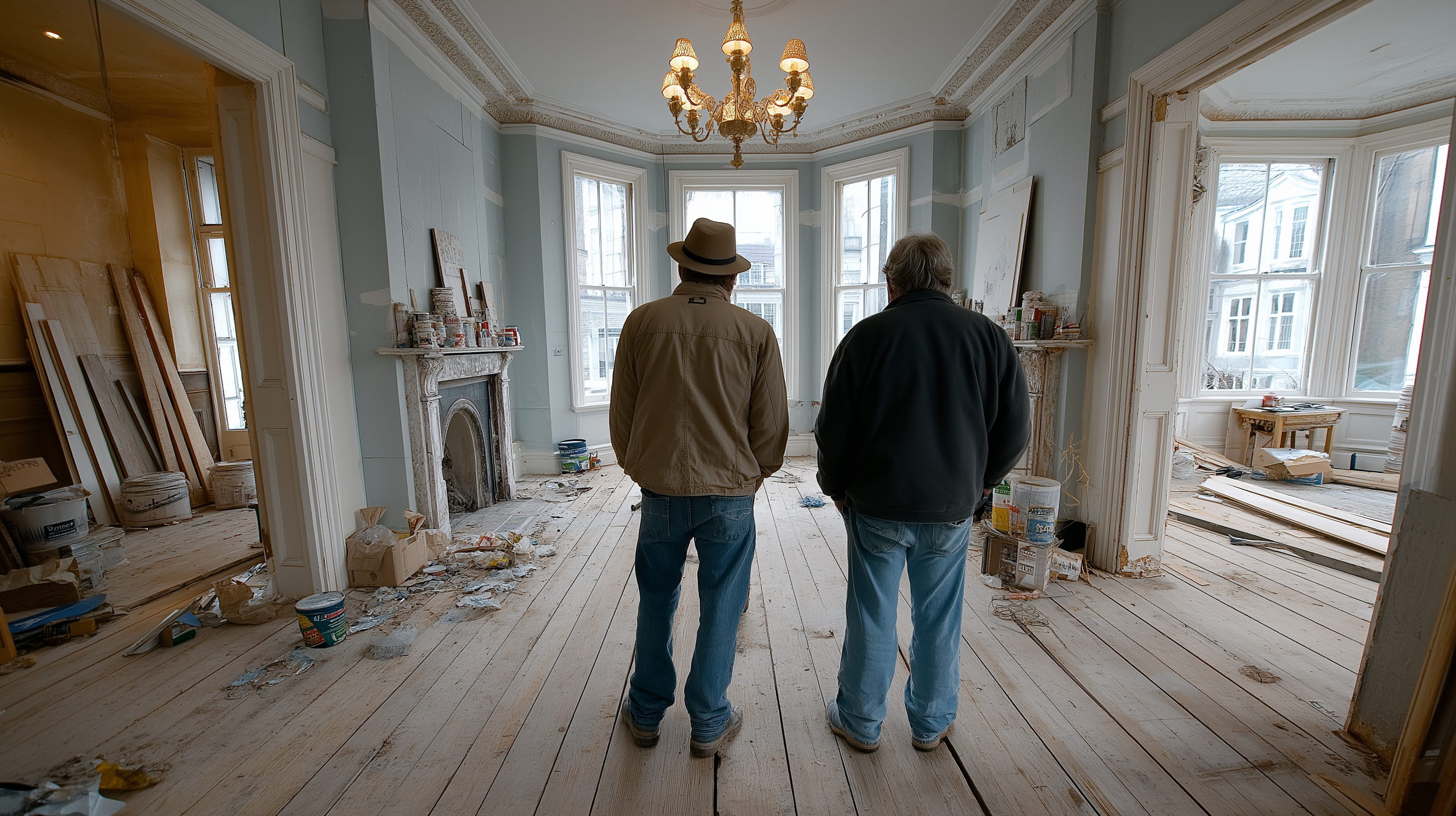
Homeowners and builders speak the same language only on the surface. Beneath that, they come from different worlds, shaped by different assumptions, rhythms and definitions of what a successful project looks like. Most renovation tension comes from these hidden mismatches.
Renovations aren’t just construction projects. They’re relationships. Not romantic ones, although there is sometimes the same mix of hope, frustration, excitement and fatigue, but relationships nonetheless. Two parties come together around a shared goal, yet they see the world through completely different lenses. The homeowner lives in emotion, imagination and domestic disruption. The builder lives in sequencing, constraints and the physical reality of the house.
This difference doesn’t mean conflict is inevitable. But it does mean misunderstandings are common, and they often appear suddenly, over something small, long before either side realises what’s actually gone wrong. Once you understand the psychological split between the two roles, everything that felt personal begins to feel logical instead.
Homeowners Think in Vision. Builders Think in Process.
A homeowner imagines the finished space. They picture the colours, the light, the quiet of a room that doesn’t exist yet. Their mental world is the end result. Everything else is noise they must endure to get there.
A builder, meanwhile, begins at the opposite end of the story. They think about access, sequencing, drying times, structural limitations, logistics, lead times and who needs to be where on which day. Vision comes last. Process comes first.
So when a homeowner asks about paint colours before the electrics are even roughed in, they’re not being superficial. They’re thinking in the order that feels natural to them. And when a builder brushes off the question as premature, they’re not being dismissive. Their brain is wired to prioritise constraints over aesthetics.
Two different timelines. Two different forms of logic. Both valid.
The Same Words Mean Different Things
One of the quietest sources of friction in a renovation is vocabulary. People assume they understand each other because they’re using the same words. They don’t.
Take the phrase “small change.” To a homeowner, it might mean swapping a tap or adjusting a tile layout slightly. To a builder, a “small change” often means a new chain of dependencies. A tap affects pipe centres. Pipe centres affect plastering depth. Plastering depth affects door clearances. The ripple effect expands far beyond what the homeowner imagines.
Or consider “ready.” A homeowner hears “ready” and thinks “I can move furniture in.” A builder hears “ready” and thinks “the surface is prepared for the next trade.” These mismatches aren’t dramatic. They’re subtle. And subtle mismatches accumulate.
Homeowners Respond to Feelings. Builders Respond to Facts.
A homeowner walking into a stripped-out room doesn’t see progress. They see disruption, vulnerability, the messiness of a half-finished life. Their stress isn’t about the work itself. It’s about the feeling of exposure.
Builders, on the other hand, rarely experience emotional response inside a site. They see a room with clear tasks assigned to it. Stripping a space down doesn’t feel dramatic. It feels like the beginning of control rather than the loss of it.
The same moment creates two completely different realities. This is why a builder saying “don’t worry” often fails to reassure. They mean it sincerely. They simply don’t realise that worry isn’t intellectual. It’s sensory. It comes from the silence of a room without floors or the echo of a hallway without doors.
Misaligned Time Perception
Homeowners experience renovation time emotionally. Days feel long. Weeks feel disruptive. A delay feels enormous because they are living inside the problem.
Builders experience time practically. They assess what can realistically be done in a day. They work in sequences. A week-long delay feels normal to them because construction is full of dependencies. When a timeline slips, the homeowner thinks something has gone wrong. The builder thinks the project is behaving normally. Nothing has changed except perspective. The tension grows because neither side realises the other is reacting to a different version of the same timeline.
Plans Are Abstractions for Homeowners. Reality for Builders.
A homeowner will look at a plan and see a promise. The space will look like this. The layout will be like this. The extension will open the house in this way.
A builder looks at the same plan and sees risk. Will the steels arrive on time? Will the existing walls behave as expected when opened? Will the client change their mind? Will the floor be level enough for this design to work? The drawing isn’t a promise. It’s a hypothesis waiting to be tested by the building itself.
This is why homeowners sometimes feel as though builders treat drawings as suggestions. And why builders sometimes feel as though homeowners treat drawings as certainties. Each side is simply assigning a different emotional weight to the same piece of paper.
Tolerance vs Perfection
Builders think in tolerances. If something is within 5 mm, it’s correct. If a wall is slightly out of plumb but still within acceptable deviation, it’s fine. No one notices these things once the house is lived in.
Homeowners think in perfection. They’ve imagined a perfectly straight wall or a perfectly centred light. Their eye is drawn to the one detail that refuses to align with the picture in their mind.
Neither perspective is wrong. The builder sees what is allowed. The homeowner sees what is desired. Renovation lives in the tension between the two.
Homeowners See the Surface. Builders See the Skeleton.
A homeowner’s relationship with their house is visual. They see the colours, the flooring, the joinery, the tile patterns, the light fittings. They interpret quality visually and emotionally.
A builder’s relationship with the house is structural. They feel the weight distribution, the load paths, the hidden runs of pipes and wires. They know how everything behaves behind the surface. Their respect is for the skeleton.
This creates an interesting dynamic. Builders are often calm when homeowners panic, because they can see the underlying stability that the homeowner cannot. And builders sometimes overlook a detail that matters deeply to a homeowner, because it has no structural relevance.
Renovation becomes a process of aligning two different ways of looking at the same object.
Both Sides Carry Fear, Just Not the Same Fear
Homeowners fear making the wrong choice, spending money unwisely, living with regret, or discovering hidden problems. Their anxiety comes from uncertainty.
Builders fear making mistakes that will cost them time, reputation or profit. Their anxiety comes from responsibility.
When emotions run high, these fears can collide. A homeowner asks for reassurance at the exact moment a builder is dealing with a technical complication. Each thinks the other is being unreasonable. In truth, both are just trying to protect themselves.
Communication Isn’t the Problem, Context Is.
Most renovation conflict comes from one simple thing: each side is missing the context that makes the other side’s behaviour make sense.
The homeowner doesn’t know what the builder knows.
The builder doesn’t feel what the homeowner feels.
The homeowner is trying to imagine a future.
The builder is trying to manage a present.
One lives in the idea.
The other lives in the process.
Once you recognise this split, misunderstandings lose their sting. Renovation becomes less of a battlefield and more of a translation exercise. You start to see that neither side is wrong. They are simply working from different versions of reality, shaped by their own experiences.
And somewhere between those two realities, a new room, a new layout, a new version of the home eventually emerges.