

Why Some Renovations Feel Calm and Others Feel Chaotic
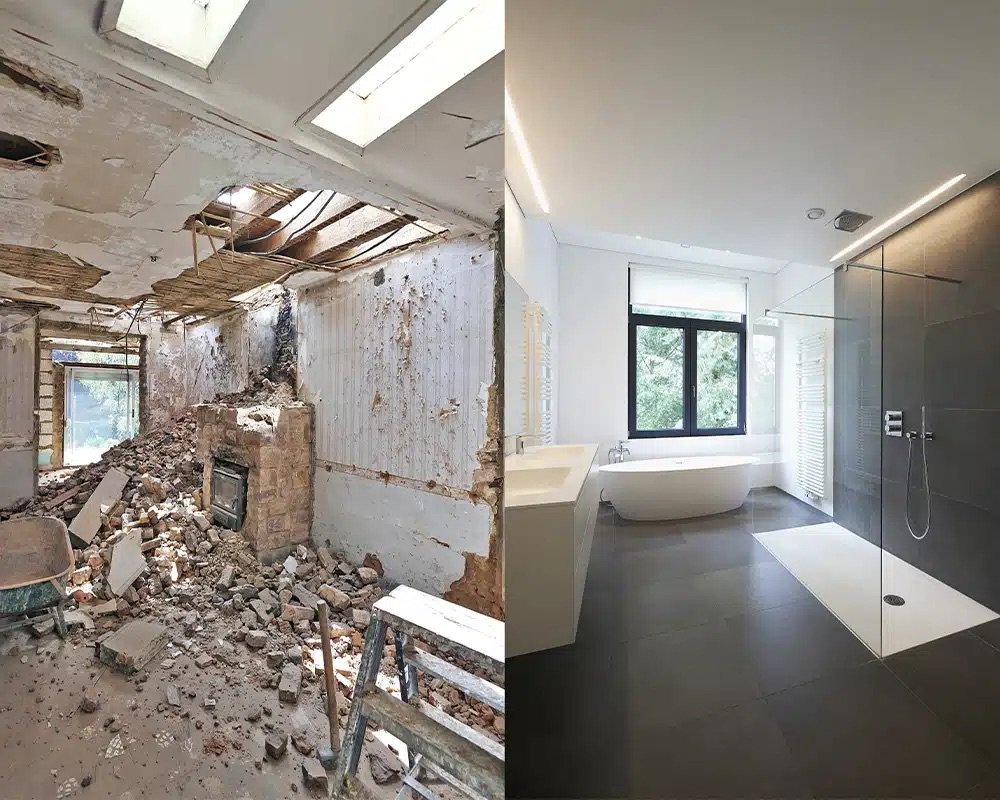
Anyone who has lived through a renovation knows that the process has a mood. Not a metaphorical mood, but a genuine atmosphere that settles over the house. Some projects feel strangely calm even when the work is extensive. Others feel chaotic long before anything substantial has begun. And once a project takes on a mood, it tends to keep it.
Homeowners often think the feeling comes down to the builder. Builders certainly influence it, but the truth is more layered. Renovations are emotional as much as practical. They disturb routines, interrupt private spaces, expose the hidden workings of a home and ask people to make decisions about things they don’t fully understand. That combination can either be energising or overwhelming, depending on how the renovation is structured.
Understanding why some projects unfold smoothly and others devolve into anxiety gives people a way to shape their experience rather than endure it.
Older Houses Fail Slowly
Older homes are usually built from solid, natural materials that behave like living things. Brick, lime mortar, timber, slate. These materials expand, contract, absorb water, release it again and find equilibrium in their own time. They rarely fail suddenly because they rarely behave suddenly. Their weaknesses tend to emerge gradually, almost politely.
Moisture finds its way into lime mortar joints before it ever threatens the structure. A timber joist softens long before it gives way. A crack in a Victorian wall usually appears as a whisper years before it becomes a problem. The warning signs are gentle. They ask for attention without demanding panic.
Even the sloping floors and leaning walls of old houses are symptoms of long-settled movement rather than imminent threat. A Victorian house that has stood for 120 years is unlikely to suddenly change its mind about doing so. This slow language of failure is why older homes feel emotionally stable. They have already revealed their temperament. They’ve reacted to decades of weather, inhabitants, repairs and alterations. They show their cards early.
New Builds Fail Quickly, but Often Superficially
New builds, on the other hand, are constructed with tighter tolerances, engineered materials and modern systems that rely on precision. Everything is straighter, lighter, thinner and more efficient. This creates comfort and clarity but also a different kind of fragility.
A minor plumbing leak in a new build can cause disproportionate damage because plasterboard and insulation aren’t designed to tolerate moisture the way brick and lime mortar can. A poorly fixed membrane in a flat roof extension can fail abruptly rather than gradually. A hairline settlement crack can appear in the first year because new plaster shrinks quickly as it dries.
New builds fail fast, but often in ways that look worse than they are. Because the materials don’t age gently, the signs of stress feel dramatic even when the underlying issue is minor. A warped engineered joist looks alarming because it’s unexpected, not because it’s structurally dangerous. A crack along a new ceiling line feels shocking because it contradicts the promise of freshness. Older homes fail incrementally. New builds fail conspicuously.
The Consequence of Tight Tolerances
One of the most underappreciated reasons new builds behave differently is tolerance. Older houses have generous tolerances built into their construction. A wall an inch out of plumb wasn’t considered a problem. Timber joists were allowed to flex. Lime mortar accommodated seasonal expansion and contraction.
Modern building materials aren’t as forgiving. Engineered timber wants to stay straight. Cement-based mortars want rigidity. Membranes want precision. Mechanical systems expect consistency. When one element falls out of alignment, there is less room for the rest of the system to adapt. This is why small errors in new builds can cause visible problems. A misplaced screw in a plasterboard fixing can create a hump in a wall. A poorly aligned drain can lead to dampness that spreads quickly. Tighter tolerances mean tighter margins for error. It also means new build failures tend to cluster in the early years, not because the house is poorly built, but because the systems are settling into equilibrium. Once those first adjustments happen, the house usually behaves predictably.
Weather Tells a Different Story Depending on Age
Older and newer homes respond to British weather in contrasting ways. A Victorian house breathes. Moisture comes and goes. Walls absorb rain and release it later. Timber responds to humidity. Movement is expected. The building accepts the seasons.
A new build resists. Membranes block moisture. Insulation traps heat. Windows are sealed tightly. The building tries to reject the environment rather than live with it. This works beautifully when everything is functioning perfectly. But when water finds a way in, the consequences appear quickly because the building has no mechanism for gentle release. Moisture can linger unseen behind a vapour barrier or within an insulated cavity. By the time it becomes visible, it often looks severe. Older homes show their weathering openly. New builds hide it until they can’t. Neither behaviour is inherently superior. They simply express different philosophies of performance.
The Role of Craft and Consistency
Older houses often owe their longevity to craftsmanship that was far from romantic, but deeply consistent. Builders repeated the same forms again and again. They understood their materials. They didn’t innovate wildly. They built terraces and semis with quiet competence.
New builds, by contrast, are often designed in ambitious ways but executed by fragmented teams. The architect designs one thing, the contractor builds another version of it, the subcontractors interpret the drawings through the lens of their specialism and the developer looks at the clock. The result may be excellent, but it is rarely uniform.
It’s the inconsistency that causes many modern failures. Not incompetence, but fragmentation. A tiny oversight in coordination can cause a leak, a crack or a thermal bridge. The building isn’t flawed. The process is simply more complex. Older homes were assembled through a craft tradition. New builds are assembled through a supply chain.
How Time Tests Each Type of House
Time interacts differently with different forms of construction. An older house has already passed most of its tests. Movement has settled. Weaknesses have declared themselves. The house has undergone cycles of expansion, contraction, moisture absorption and drying over decades. What remains is relatively stable.
A new build is still revealing itself. The plaster is drying. The materials are adjusting. The landscaping is settling. The foundations are reacting to their new load. The building moves, not dramatically but perceptibly, and homeowners often mistake this early adjustment for failure. In truth, the first two years of a new home’s life are its adolescence. It squeaks, shifts slightly, reveals imperfections and then settles down. Older homes went through the same phase a century ago. We simply didn’t witness it.
Different Expectations Shape Perceived Failure
People expect old houses to have quirks. They anticipate creaks, irregular walls, gentle slopes in floors. These traits are seen as character rather than defects. People expect new builds to be perfect. Every scratch feels like a flaw. Every crack feels like a betrayal. These expectations color everything. A hairline crack in a Victorian house is charming. A hairline crack in a new build is alarming. The crack is identical. The context is not.
Two Philosophies of Durability
Ultimately, older homes are durable because they have already survived. New builds will be durable because they are designed to meet performance standards older homes were never asked to consider. But the way they behave under stress will always differ.
Older homes endure through flexibility, mass and breathable materials. New builds endure through precision, insulation and protective systems. One adapts, the other resists, and their failures reflect their philosophies. Victorian houses sigh and whisper when something is wrong. New builds announce it abruptly. Understanding these differences helps homeowners stop fearing the unfamiliar and start listening to the building in front of them. Each one communicates in its own language. You just need to learn the accent.
The First Days Set the Tone
The early phase of a renovation carries disproportionate weight. People walk into stripped-out rooms, see bare brick or exposed joists and feel they’ve committed to something irreversible. The house no longer feels like a home. It feels like a site. If that first impression is handled gently, the project starts on stable emotional ground. If it isn’t, uncertainty lingers.
Calm renovations often begin with clarity. The team arrives with purpose. They explain what will happen next. They establish a rhythm. People know what to expect over the coming days. This sense of choreography is soothing. It suggests the renovation is being guided rather than improvised.
Chaotic renovations begin with a different energy. Plans change. Tools arrive before people know why they’re needed. Walls come down before anyone has explained what will replace them. The house shifts from domestic space to construction site without ceremony. People aren’t overwhelmed by the work. They’re overwhelmed by the lack of narrative.
The Role of Decision Fatigue
Every renovation involves an extraordinary number of small decisions. Light fittings. Socket locations. Timber profiles. Paint finishes. Handle choices. People tend to underestimate the cumulative strain this creates. When the decisions feel manageable, the project feels calm. When they pile up faster than people can process them, the project feels chaotic.
There is a moment in many renovations when a homeowner realises they are being asked to choose between options they don’t understand. It could be a plumbing layout or a structural adjustment. The customer gives an answer because they feel they must, not because they know what they are deciding. Even a confident person can feel suddenly adrift.
A calm renovation protects people from decision fatigue. The decisions are sequenced sensibly. Only relevant information is presented. Options are curated rather than dumped wholesale. People feel guided. A chaotic renovation feels like a test they didn’t study for.
When the House Loses Its Identity
A renovation temporarily removes the familiar cues that make a house feel like a home. Floors disappear. Doorways shift. Light behaves differently. The quiet in the evenings is replaced by echoes off bare plaster. Humans anchor themselves through environmental predictability, so when the predictability goes, the nervous system reacts.
Some houses tolerate disruption better than others. A spacious Edwardian home can lose walls and still retain a sense of itself. A compact Victorian terrace can feel overwhelmed the moment the first tool hits the floorboards. The architecture influences the emotional weight of the work.
Calm renovations often preserve some element of continuity. A room is left intact. A hallway stays functional. Something familiar remains. Chaos emerges when everything is stripped at once and the house disappears too quickly. You aren’t just renovating a building. You’re temporarily erasing its identity, and that can be unsettling unless done thoughtfully.
People Forget That a Renovation Is a Social Event
Renovations bring strangers into intimate spaces. People you don’t know walk through your home, use your sink, move your belongings, enter your private rooms and leave dust in places you didn’t expect. Even when the team is excellent, it changes the atmosphere.
Calm projects often involve teams who understand the social dynamics. They greet the homeowner properly. They communicate. They occupy the house respectfully. They treat the space as lived in, not abandoned.
Chaos happens when the social contract breaks. Trades arrive unannounced. Tools appear in bedrooms without warning. Music plays loudly. Instructions conflict. The house begins to feel taken over rather than worked on. Much of what people call “chaotic” is really a feeling of being socially overwhelmed in their own home.
Invisible Work Makes People Nervous
Renovations include long stretches where nothing seems to happen. The structural work is done but the walls aren’t plastered yet. The plumbing is installed but still hidden behind boards. The electrician has been in but the lights don’t work because the circuit isn’t complete.
Calm renovations make invisible work visible through explanation. People understand that progress is happening even when they can’t see it. They trust the process.
Chaotic renovations leave homeowners staring at what looks like stasis. Days pass. Dust accumulates. Visitors ask how things are going and the homeowner realises they don’t actually know. The house feels stuck, which is one of the most stressful sensations a project can create.
Money and the Unpredictability Problem
Even the most organised renovation includes financial uncertainty. Hidden issues appear. A wall that looked fine from the outside reveals problems once opened. Plumbing routes turn out to be more complex than anticipated. Budgets shift.
Calm renovations handle this in a measured way. Costs are explained before decisions are made. People feel informed, not cornered. Chaotic renovations throw surprises without context. A phone call or a text message asks for another payment and the homeowner feels as though the ground has moved beneath them. Renovation is a financial relationship as much as a construction one. When that relationship feels transparent, the project feels steady. When it feels reactive, the project feels like a storm.
Routine Is the Anchor
Renovations disrupt daily life, but calm projects find ways to preserve routine. Maybe the temporary kitchen actually works. Maybe the builders leave on time each day. Maybe the noise is predictable. Maybe the dog gets used to the footsteps.
Chaos creeps in when every day feels different. One morning the team arrives early. The next morning no one appears. The water is off unexpectedly. The power trips during the school run. Life becomes unpredictable in small but cumulative ways. Humans cope with disruption and they struggle with randomness.
Why Some Houses Feel Better During Renovation
Certain homes seem to hold their dignity even while being dismantled. A well-proportioned Edwardian hallway can absorb dust and ladders without feeling invaded. A Victorian front room, even stripped to joists, still carries a kind of architectural poise.
Other houses lose their equilibrium the moment work begins. Rooms feel too close. The air feels unsettled. The mess amplifies the tightness of the footprint. Even if the work is well run, the house itself makes the experience intense. A calm renovation doesn’t just depend on the team. It depends on the underlying architecture and how gracefully it tolerates interruption.
And Sometimes, It Really Is the Builder
There are situations where the difference between calm and chaos is straightforward: one team treats the house with intention and another doesn’t.
Good builders understand that renovation is an emotional experience as much as a technical one. They move through the home respectfully. They communicate before they act. They explain things without making the homeowner feel foolish. Calm follows them.
Other teams, even if technically competent, create noise in more ways than one. They work reactively. They forget that a family is living inside the site. They disappear for days without warning. The house absorbs their unpredictability. People don’t remember the quality of workmanship as vividly as they remember how the process felt. Calm is part of the craft.
A renovation has a way of magnifying everything: people’s patience, the house’s character, the clarity of plans and the quality of communication. When things align, the process feels almost meditative. When they don’t, the smallest change can feel like a crisis.
The truth is simple. Calm renovations aren’t lucky. They’re built on rhythm, clarity and respect. Chaotic ones aren’t cursed. They’re the product of misalignment. Once you recognise the difference, you start to see renovation not as an ordeal, but as a temporary season the house passes through on its way to becoming something better.