

The Quirks of Edwardian Houses Homeowners Should Understand
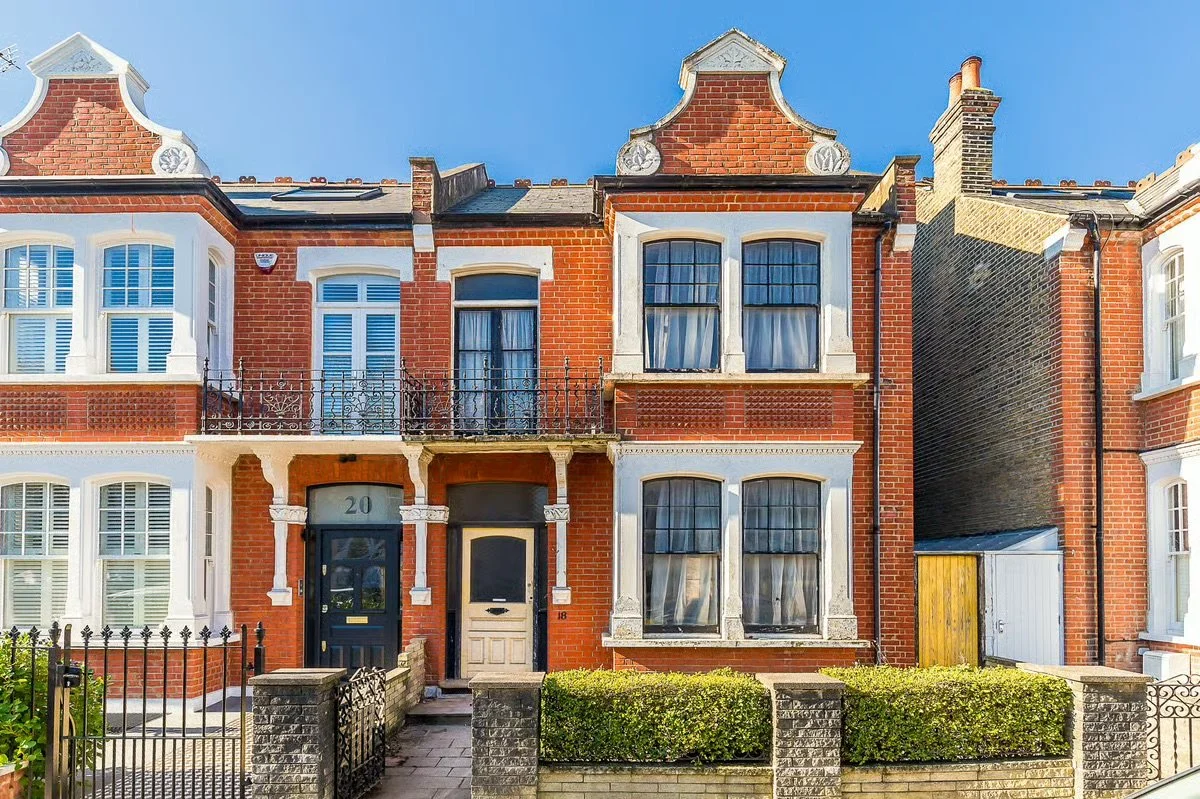
Edwardian houses occupy a unique moment in British domestic architecture. Lighter, more cheerful and more spacious than their Victorian predecessors, they introduced design habits that still shape how we think about comfort today. But they also have quirks that every homeowner eventually discovers.
Edwardian houses sit at an interesting crossroads in British architectural history. They were built during a brief but influential period when craftsmanship was still valued, mass production was improving, and domestic life was beginning to relax. The result is a type of home that feels noticeably softer than the Victorian terrace yet still rooted in tradition. You can sense the shift as soon as you walk inside. The rooms feel brighter. The details feel more optimistic. The façades often carry a gentle decorative flourish that Victorian builders, with their stern efficiency, had little time for.
But Edwardian houses also have personalities. They are not as uniform as Victorian terraces nor as experimental as interwar homes. They contain oddities, inherited patterns, playful details and construction choices that make them both charming and occasionally perplexing. Understanding these quirks helps homeowners appreciate their character rather than treating them as architectural inconveniences.
A Softer, Lighter Approach to Space
One of the most noticeable differences between Edwardian and Victorian homes is the treatment of space. Ceilings are still high, but the rooms tend to be wider and more open. Hallways feel less like corridors and more like small reception areas. Windows are generous without being dramatic. Where Victorian architecture often climbed vertically with serious intent, Edwardian houses open themselves horizontally in a way that feels welcoming.
This shift reflects a cultural change. Domestic life was becoming less rigid. Entertaining was more informal. Families wanted daylight, air and comfort. Builders responded with bay windows, wider staircases, decorative timber details and porches that signalled hospitality rather than hierarchy.
This openness makes Edwardian homes particularly easy to modernise. Many layouts adapt well to kitchen extensions, loft conversions and reconfigured reception rooms. Their proportions are forgiving, and their fundamental cheerfulness remains even after significant alterations.
Timber Everywhere, for Better and Worse
Edwardian builders loved timber. They used it for porches, gables, balustrades, floor joists, decorative panels and even internal walls in some cases. Visually, this gives Edwardian homes an appealing warmth. But timber ages, and Edwardian timber has now been absorbing the British climate for more than a century.
The quirks show up gradually. Floorboards creak in ways that feel almost conversational. Balustrades develop a slight sway. Decorative gables need repainting more often than people expect. Original timber frames sometimes stick in summer then open effortlessly in winter. Nothing about these behaviours indicates structural failure, but they reveal the house’s age and personality.
When people buy Edwardian homes, they tend to fall for the timber details first. What they don’t always realise is that those details require gentle, occasional maintenance to keep them looking fresh. It’s part of the charm, part of the cost and part of the relationship.
Fireplaces That Define the Rooms
Edwardian houses often contain multiple fireplaces, even in rooms that today feel too modest for one. Each fireplace was originally the centre of a room, determining its geometry and purpose. Even now, when fireplaces are rarely used for primary heating, they dictate how people arrange furniture and how the room feels the moment they enter.
In Victorian homes, fireplaces can feel grand and formal. In Edwardian houses, they feel friendlier. Tiles often carry floral motifs. Mantels are simpler. The scale is gentler. People don’t always realise this when viewing a property, but the presence of a fireplace – even a small one – instantly adds emotional weight to the room.
This is also the reason many Edwardian houses seem to resist certain modern layouts. Remove too many fireplaces and the rooms lose their anchor. Keep them and they offer structure without rigidity. It’s a balancing act, and one homeowners develop a feel for over time.
The Odd Geometry of the Roof
Stand at the front of an Edwardian house and the roof often gives you the first hint of its eccentricities. Overhanging eaves, asymmetrical gables, dormers placed slightly off centre – the roofline is rarely predictable. Victorian roofs tend to follow a consistent ridge. Edwardian ones have a playful irregularity that feels almost handmade.
Inside, these quirks reveal themselves in lofts that require inventive layouts, ceiling lines that slope unexpectedly, and storage spaces that appear in places no modern architect would consider. These idiosyncrasies are not flaws. They are part of what makes Edwardian houses so adaptable. The roof offers opportunities for character, whether you convert it into a bedroom, a study or simply leave it as the house’s secret upper world.
People often talk about the romance of Edwardian lofts without quite realising why. The charm comes from that irregular geometry. It feels less like a designed room and more like a discovered space.
Glass, Light and the Edwardian Mood
Another subtle quirk of Edwardian houses is the way they handle light. Stained glass panels often sit in doorways or porches, casting warm coloured shadows across the hallway. Windows are sometimes subdivided with delicate leadwork that breaks the light into patterns rather than broad washes.
These small design gestures give Edwardian homes a softness that people sense instinctively. Even when the interiors have been modernised, that gentle interaction between light and decorative detail remains. It’s one reason people often describe Edwardian homes as calm or uplifting even before they’ve had time to settle in.
Modern architects sometimes try to recreate this quality through skylights or floor-to-ceiling glass, but the Edwardian version feels more intimate. It’s designed for the British climate and British light.
The Way Edwardian Houses Sit on Their Streets
Victorian terraces impress through repetition. Edwardian streets, on the other hand, gain charm from variation. Houses often share a general style but differ subtly in detail. One has a decorative porch. Another has a slightly different gable. A third has stained glass in a pattern you don’t see anywhere else on the road.
This gentle inconsistency creates streetscapes that feel alive. You can walk down an Edwardian road and sense the individuality of each house without feeling that the street lacks coherence. It’s personality rather than strict uniformity.
That sense of individuality continues inside. Edwardian builders experimented with internal layouts. Some houses have unusually deep hallways. Others have generous landings. Occasionally you find a kitchen that seems disproportionately large for its era. These deviations weren’t mistakes. They were part of a design culture that valued comfort and optimism.
Hidden Modernity Beneath the Charm
People often imagine Edwardian houses as traditional, but they were surprisingly modern for their time. Many include early plumbing innovations, larger kitchens and thoughtful storage cupboards. Some of the first suburban homes built for middle class families appear in this era, which means the Edwardians were already thinking about convenience and domestic flow in ways Victorians had not.
This is why Edwardian homes work so well today. Underneath the timber details and stained glass, there’s a practicality that feels contemporary. The bones are sensible even when the decoration is ornate.
Owners regularly describe their Edwardian house as endlessly accommodating. They modernise a room and the house accepts it. They add an extension and it adapts without losing its nature. There’s something generous in the design that continues to support everyday life in a way few later housing styles manage.
Edwardian houses occupy a sweet spot in British architectural history. They have the grandeur of Victorian buildings without the austerity, and the practicality of modern homes without the sterility. Their quirks reveal their age, but those quirks also make them deeply endearing. You learn their habits, listen to their little eccentricities, and eventually realise they’re part of what makes the home feel alive.
They’re buildings with gentle optimism in their bones. And in a city that has seen so many shifts, that optimism is surprisingly resilient.