

The Hidden Risks in Older Homes: What Renovators Usually Miss
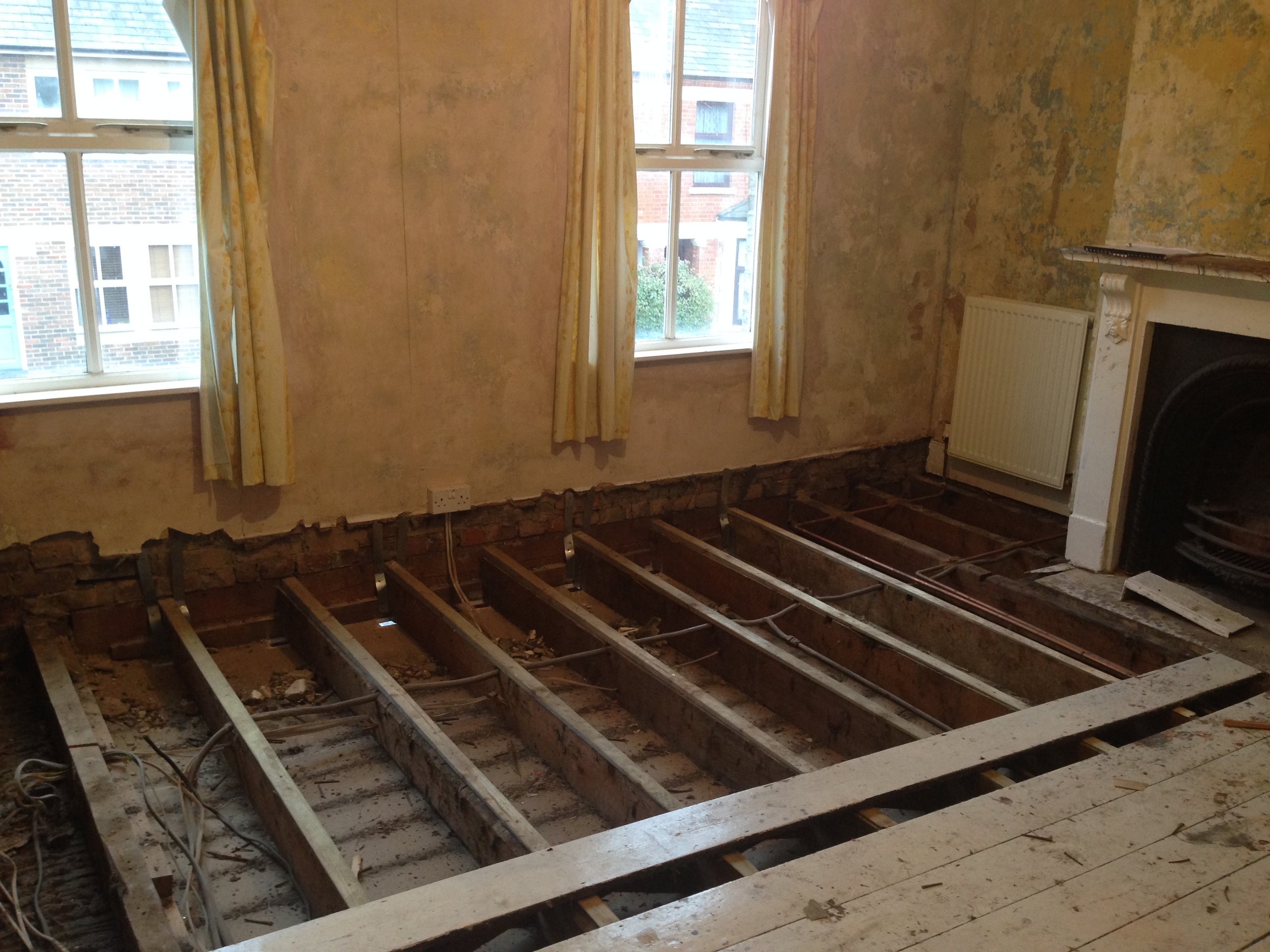
Older homes carry layers of history within their walls, floors and services. Renovators often assume these buildings simply need updating, when in reality they require investigation. Age introduces risks that only reveal themselves once the work has begun.
A Home With a Long Memory
British housing stock is old, and it carries the memory of every alteration, repair and oversight imposed upon it. Victorian terraces with their soft bricks and timber joists sit beside Edwardian maisonettes with sprawling drainage runs and improvised electrics. Deco mansion blocks hide their age behind handsome façades, but their structural and mechanical systems often tell a more complicated story.
When homeowners plan a renovation, they usually picture modern finishes, new layouts and improved comfort. What they rarely anticipate is the weight of history beneath their feet. Older homes are not blank canvases. They are layered systems, each generation contributing its own interpretation of structure, services and repair. Renovation exposes this accumulated improvisation. The true condition of an old home is revealed only when it is opened.
Timber Joists: The Most Underestimated Structural Element
Timber joists in older homes are deceptively fragile. Many were sized according to Victorian span tables that predate modern load expectations. They may have been cut, notched or drilled by decades of trades. Some are riddled with historic moisture damage. Others carry loads they were never designed to support because previous owners altered layouts without structural thought.
The risk is not dramatic collapse but gradual failure: excessive deflection, sagging floors, cracked ceilings, vibrating rooms. Homeowners often interpret these as superficial issues when they are symptoms of structural fatigue. Renovations that open floors expose joists that have been quietly struggling for decades, revealing patches, old nail plates, spliced timbers and, occasionally, nothing more than habit holding them in place.`
Clay Drains and Cast-Iron Stacks: The Forgotten Infrastructure of the House
Victorian and Edwardian drainage was built around clay pipes and cast-iron stacks. These systems were robust in their time but were never designed for modern loads, detergents, dishwashers or pressure fluctuations. Many are fractured underground, displaced by ground movement or choked by old repairs that narrowed the internal diameter. Cast-iron stacks often corrode from the inside long before the outside shows any sign of distress.
Homeowners only discover these vulnerabilities when excavation begins, when a bathroom is relocated, or when a seemingly minor plumbing reroute exposes the fragility of the system. A blocked clay pipe is not simply an inconvenience. It can undermine foundations, lead to internal water damage or trigger costly emergency works mid-renovation.
Aged MEP Systems: The Quiet Complications Behind Every Wall
MEP — mechanical, electrical and plumbing - is where older homes reveal their most unpredictable behaviours. Wiring may follow outdated standards with junction boxes hidden beneath floorboards. Heating systems may rely on pipework that reduces in diameter unpredictably or runs beneath floors that cannot be lifted without dismantling half the room. Ventilation is often incidental rather than designed, leaving kitchens and bathrooms reliant on habits rather than systems.
Homeowners imagine they are upgrading finishes. In reality, they are intervening in a web of past decisions, each made according to the knowledge, technology and budget of its era. Renovation frequently transforms into a sequence of discoveries, each demanding more coordination than expected.
Older homes do not resist modernisation. They simply require it to be done with an understanding of what lies beneath.
Hidden Structural Alterations From Past Generations
The most surprising discoveries in old homes are often man-made rather than time-made. Previous owners may have removed walls without proper support, cut joists to fit plumbing, or added loads without structural design. Some of these interventions survive because the building has redundancy; others persist only because nothing has yet forced them to fail.
When renovations begin, these concealed decisions emerge. A beam thought to be original may turn out to be an old door lintel repurposed out of convenience. A load-bearing wall may have been partially removed decades ago, relying on a single timber post hidden behind plaster. These are not rare scenarios. They are common.
Older buildings carry modifications like scar tissue. Renovation exposes the healing.
Moisture: The Slow and Silent Architect
Moisture is a defining characteristic of older homes. Rising damp, penetrating damp, ageing roofing felt, old flashings, poorly ventilated voids, historic leaks - water moves through old buildings in ways that modern construction rarely anticipates. Timber can appear solid on the surface while harbouring soft, decayed cores. Plaster can mask years of moisture migration. Subfloors can trap humidity until the boards warp or fail.
Homeowners often interpret damp patches as cosmetic. Renovations reveal them as structural or systemic. Moisture behaves according to physics, not convenience, and older homes provide ample pathways for its movement.
Understanding moisture is understanding the building’s long-term health.
Foundation Uncertainty and Ground Movement
Victorian foundations vary wildly. Some are deep, robust and reasonably predictable. Others sit close to ground level or bear directly onto clay soils that shrink and swell with seasons. Tree roots, drainage issues and historic settlement can all influence stability. Renovations that excavate, extend, or change load paths can introduce new stresses onto old foundations.
Most older homes are stable despite their age, but their stability is seldom uniform. Renovation uncovers these nuances. Engineers do not treat older foundations as unreliable. They treat them as unverified.
Why Renovating an Older Home Requires a Different Mindset
Modern homes are designed according to documented standards and predictable behaviour. Older homes are accumulations of assumptions. The risks they contain are not signs of failure but signs of life. They reflect decades — sometimes centuries — of occupation, adaptation and repair.
Homeowners approaching an older home with modern expectations often feel blindsided when a refurbishment becomes more complex. Those who approach it with curiosity and respect for its history find the process far more coherent.