

Future Homes Standard Explained: What It Means for Extensions After 2026
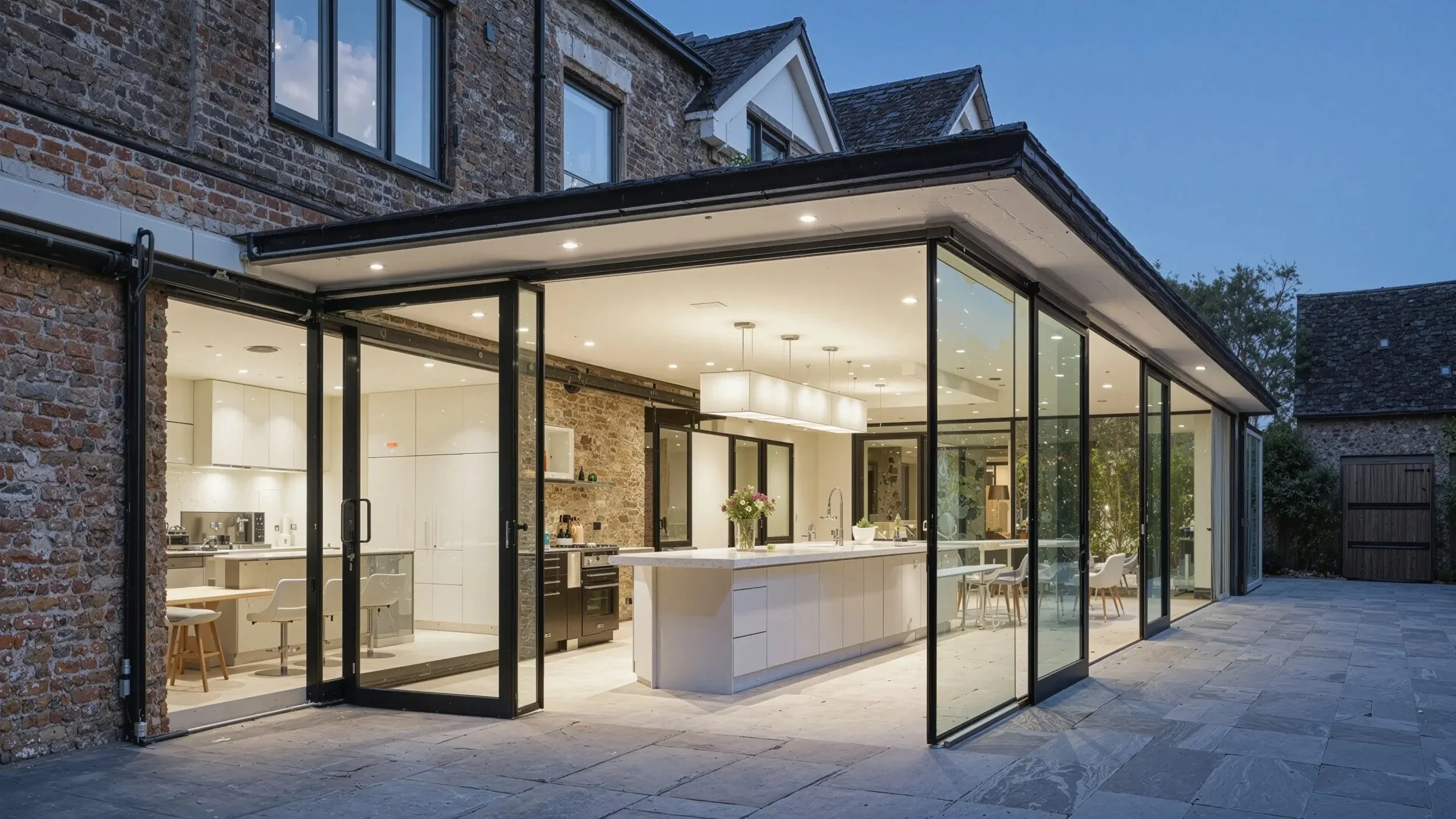
The Future Homes Standard will reshape domestic extensions across the UK. It raises expectations for insulation, airtightness, energy use and heating, but its deeper impact lies in how it changes the relationship between design, carbon and the existing house.
A Standard Designed for New Homes, Felt by Every Renovation
The Future Homes Standard was introduced to transform the performance of new-build housing, but its influence doesn’t stop at new homes. Most major regulatory changes eventually ripple into domestic renovation because designers, contractors and building control bodies use the same technical vocabulary across all projects. By the time 2026 arrives, homeowners will notice that even small extensions come with new assumptions about energy efficiency, heat loss, glazing ratios and heating design.
The Standard’s intention is simple: reduce carbon emissions dramatically by raising the baseline performance of buildings. Its consequences for renovations are less simple. It shifts what is considered acceptable and raises the threshold for what designers can justify. Homeowners used to choose the feel and style of an extension; now they must also consider how that extension performs as part of a much larger environmental ambition.
Energy Efficiency Is No Longer an Afterthought
For decades, the thermal performance of domestic extensions was treated as something to be “dealt with later”. You designed the room, chose the doors, picked the finishes, and somewhere along the way a contractor added insulation according to minimum standards. The Future Homes Standard reverses this sequencing. Energy efficiency becomes a foundational design constraint rather than a technical detail.
Extensions will require higher-performing insulation, improved airtightness and more careful control of heat loss. These measures are not cosmetic. They influence the extension’s form, the thickness of walls, the type of glazing, the heating strategy and even the aesthetic of the project. Homeowners will increasingly find that design ideas must respond to performance requirements rather than the other way around. The conversation shifts from “what looks good?” to “what works within the new regulatory logic?” Energy is no longer a background concern. It is part of the architecture.
Glazing Ratios Will Become a Quiet Battleground
Large panes of glass, once the signature of domestic extensions, will face new scrutiny. The Future Homes Standard doesn’t ban expansive glazing, but it makes designers justify it in ways few homeowners expect. A beautiful sliding door is no longer just a design feature; it is an energy calculation, a thermal performance negotiation and a balancing act between ambition and regulation.
This doesn’t mean the end of glassy extensions. It does mean the end of unthinking ones. To achieve the same visual drama, designers must work harder: more performant glass, better framing systems, improved insulation elsewhere, and smarter modelling of heat loss. Homeowners may notice that certain design ideas require trade-offs, not because tastes have changed, but because the regulatory landscape has. The future of glazing will be less about desire and more about justification.
The End of the Gas Boiler Era Shapes Everything
Even though the Future Homes Standard primarily applies to new homes, its underlying philosophy is already pushing domestic renovations away from gas. The long-term direction is clear: fossil-fuel heating is being phased out. Whether or not homeowners install heat pumps immediately, the design expectations around heat loss, emitter size and system compatibility are shifting.
This makes the extension’s performance even more critical. A poorly insulated room is manageable when a powerful boiler can mask inefficiencies. A low-carbon heating system cannot compensate so easily. The new standard forces designers to think holistically: how does the extension integrate into the home’s heating system not just today, but ten years from now?
For homeowners, this is a conceptual shift. The extension is no longer a stand-alone object. It is part of a future heating strategy.
Fabric First Means Fewer Shortcuts and More Thoughtful Design
“Fabric first” has become a guiding principle in modern construction: improve the building envelope rather than relying on technology to overcome deficiencies. The Future Homes Standard embeds fabric-first thinking deeply into the regulatory mindset. For domestic extensions, this means thicker walls, better windows, more disciplined detailing and a more scientific approach to junctions where heat can escape.
Homeowners sometimes ask why their neighbour’s extension built ten years ago used slimmer walls or simpler detailing, and the answer lies in this shift. The expectations have risen. What was acceptable yesterday is insufficient today. Extensions will increasingly resemble micro versions of high-performance homes, not just decorative additions to the rear of a property.
This change is not aesthetic. It is philosophical. The envelope becomes a technical instrument, not just a backdrop.
Ventilation Moves From Casual to Calculated
Ventilation has always been required, but rarely understood. The Future Homes Standard forces ventilation to become a deliberate part of design rather than an afterthought. As airtightness improves, stale air has fewer escape routes, meaning that extraction, circulation and fresh air supply become critical components of comfort and health.
Homeowners will notice this in subtle ways: more conversations about extract rates, more emphasis on whole-house air pathways, and more sensitivity to humidity. Designers will increasingly treat ventilation as a system rather than a set of fans.
A well-insulated extension without proper ventilation feels heavy and damp. The Standard ensures these mistakes become rarer.
Building Control Will Expect More Than Minimum Compliance
Local authorities and private inspectors are already adjusting their expectations in anticipation of the Future Homes Standard. This does not mean applying the new rules prematurely, but it does mean interpreting existing regulations through a more ambitious lens. A design that only just meets the current minimum may be questioned more rigorously. Alternative solutions will require stronger justification. Vague performance claims will be challenged.
This is part of a wider cultural shift: compliance is no longer about hitting thresholds, but demonstrating intent, responsibility and credible performance. Homeowners may notice that approvals feel more inquisitive. This isn’t obstruction. It’s alignment with where regulation is heading.
The Extension Becomes Part of a Carbon Conversation
Perhaps the most important conceptual change is that domestic extensions are no longer assessed solely as lifestyle projects. They are evaluated within a broader environmental narrative that includes heat loss, energy demand, carbon emissions and long-term resilience. The extension is no longer just a room. It is a component of an energy system.
This shift will feel unfamiliar to many homeowners, but it reflects the direction of the industry and the priorities of future regulation. Even modest projects now sit within a national ambition to produce homes that lose less heat, demand less energy and support low-carbon technologies. The Future Homes Standard is not simply a regulation. It is a redefinition of what it means to design responsibly.
Homeowners may not feel the full force of the Future Homes Standard immediately, but they will feel its influence in the conversations they have with architects, builders and building control bodies. The questions asked will change. The solutions proposed will evolve. The assumptions behind domestic design will expand to include performance, not just appearance.
Domestic architecture is entering a new era. The Future Homes Standard is not the end of that journey, but the signal that the journey has begun.