

Why do houses show cracks?
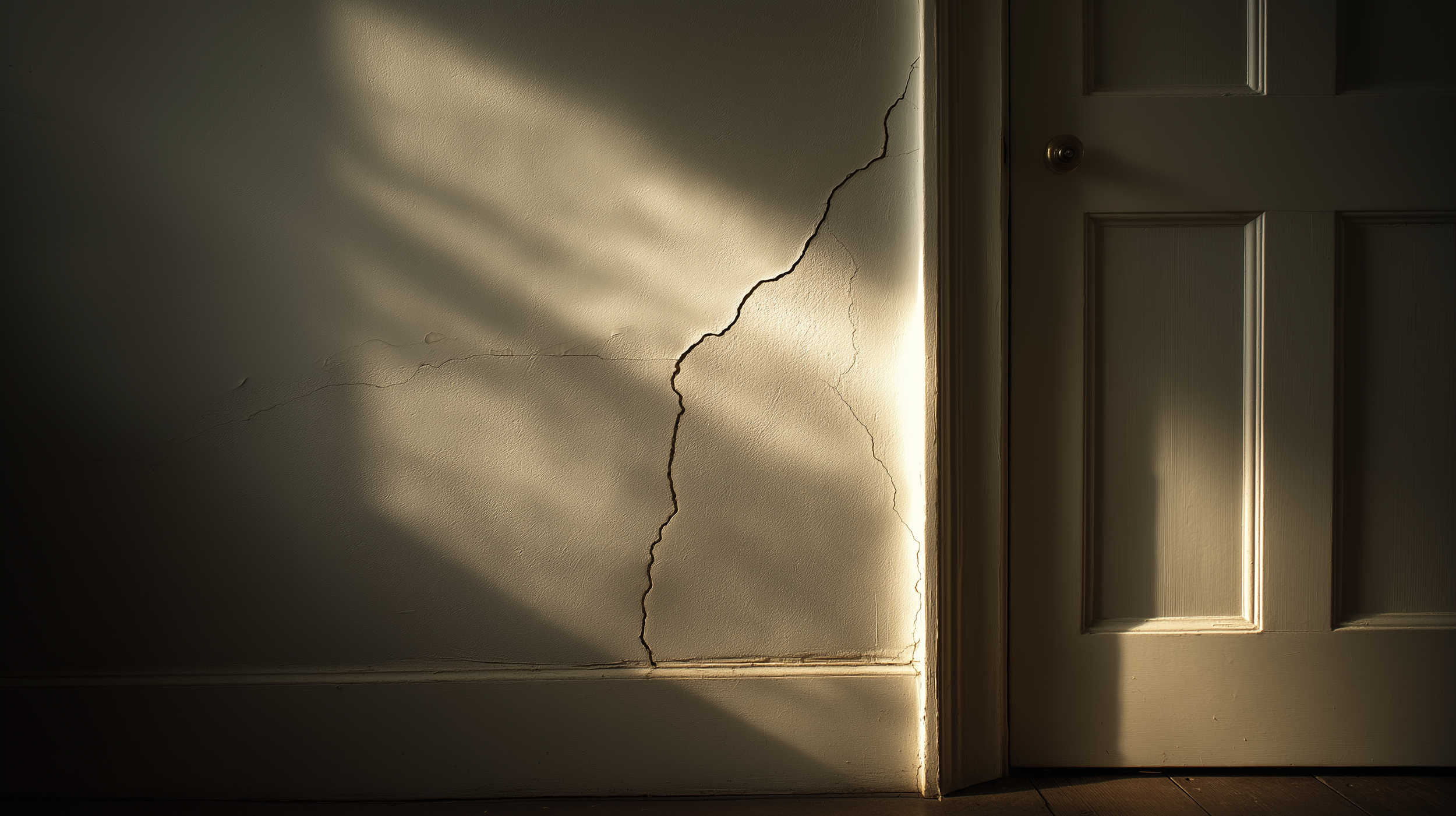
Cracks often alarm homeowners, yet most are the visible trace of movement, moisture and temperature - not structural danger. Understanding why buildings crack brings clarity, calm, and a deeper appreciation for how homes behave.
There is something almost intimate about noticing a new crack in your home. You’ll be walking past a doorway you’ve passed a thousand times, and suddenly there it is — a thin, almost delicate line running along the plaster. It’s rarely dramatic. It doesn’t gape or crumble. But it catches the eye with surprising force. You stop. You look again. And you worry.
It’s an instinctive reaction. Homes feel like the one thing in life that shouldn’t change unless we decide they should. A crack suggests the opposite: that the house is shifting on its own terms. For many homeowners, that’s what’s frightening — not the line itself, but the implication that the building has a life you can’t fully control.
The truth is far less ominous. Houses crack because they move, and they move because they’re made of materials that expand, contract, absorb moisture and release it again. If you could accelerate the seasons and watch your home in time-lapse, you’d see it flexing slightly — not dramatically, not dangerously, but enough to leave faint traces on the surface. Those traces are the cracks we notice so anxiously.
Buildings Move Far More Than People Think
It’s easy to imagine a building as something solid and immovable. After all, from our perspective, walls don’t sway and floors don’t bend. But at a microscopic level, almost everything inside a home is shifting around.
Timber joists expand when the air is humid and shrink when it’s dry. Plaster shrinks as it cures and then expands and contracts with temperature. Bricks absorb moisture during a wet winter and release it in spring. Metal beams respond to heat more quickly than the materials fixed around them.
These movements are tiny — often just millimetres — but buildings interpret millimetres as tension. And when materials with different personalities are fixed together, something has to give. Cracks are simply the way the house resolves that tension.
A Realistic Example: Anna’s Crack in Battersea
People often feel better when they realise they’re not alone, so imagine a homeowner in Battersea named Anna, found a diagonal crack above her living-room door one February morning. It hadn’t been there at Christmas. She panicked, naturally. She imagined subsidence, major structural work, insurance claims, builders shaking their heads in quiet disapproval.
When a surveyor came to look at it, he barely glanced before saying, “This is just your house adjusting after a dry winter.”
The timber lintel above the doorway had lost moisture thanks to weeks of central heating. Heat dries timber. Dry timber shrinks. The plaster sitting over that timber doesn’t shrink at the same rate. Something had to give, and the plaster yielded first. The crack was nothing more dramatic than that — the architectural equivalent of a yawn after a long sleep.
The relief she felt wasn’t just because the crack was harmless; it was because the mystery had been removed.
Moisture: The Invisible Architect of Cracks
If there’s one thing responsible for most domestic cracking, it’s moisture — not the dramatic kind that comes through a leaking roof, but the everyday moisture that the building absorbs and releases as the seasons change.
Fresh plaster, for example, shrinks as it dries. It doesn’t happen perfectly evenly, and the result is a network of faint lines across a new wall. This terrifies many homeowners, especially after a renovation. In truth, it’s completely normal. Plaster behaves more like a natural material than an industrial one; it settles into its environment gradually.
Timber responds even more noticeably. Open a window on a warm summer evening and you’ll hear floorboards creak as they absorb moisture from the air. Close it during winter and you’ll notice gaps reappear between boards. Doors stick in July and glide smoothly in January. Every bit of timber in your home is moving to the rhythm of the weather.
Brickwork shifts too. Clay bricks absorb water during long spells of rain, expanding slightly, then contract as they dry. Mortar behaves differently again. All of this affects the layers above — including your plaster.
Once you understand how much a building breathes, cracks stop feeling like intruders and start feeling like punctuation marks in a long conversation between the house and the seasons.
Temperature Makes Everything More Dramatic
Moisture has a willing accomplice: temperature.
When the sun heats a south-facing wall, that section of the house expands more than the shaded hall behind it. When underfloor heating warms a ground floor slab, the ceiling above may react differently. When a loft conversion brings insulation tight against the roof, the temperature fluctuations inside the structure increase.
Different temperatures mean different expansion rates. Different expansion rates mean tension. Tension produces cracks.
This is why cracks often appear at junctions — places where materials meet. Corners. Door frames. Ceiling lines. It’s not shoddy workmanship; it’s physics.
Why Old Homes Crack More Than New Ones
Victorian and Edwardian homes are particularly prone to small cracks, partly because they’re built from natural materials and partly because their foundations are often shallow. London clay — which underlies huge parts of the city — swells when it’s wet and shrinks when it’s dry. Older buildings were constructed to flex with this seasonal breathing.
Surveyors call this “cyclical movement.” Homeowners call it “my house shifting.” Neither is wrong.
When a Crack Actually Matters
Of course, not every crack is innocent. A few warning signs do exist:
cracks widening over time
cracks that appear suddenly in multiple rooms
stepped cracks in brickwork outside
cracks accompanied by doors sticking or floors dipping
These may indicate something structural, or occasionally subsidence. But they behave differently from the ordinary hairline marks that most people find. They get worse, and they often form patterns rather than appearing in isolation.
Still, most cracks — truly most — are harmless. Cosmetic. Existentially inconvenient but structurally irrelevant.
The Psychology Behind Why Cracks Feel Threatening
What makes a crack so unsettling is not its size but its symbolism. Homes represent stability. They create a sense of control, even if that control is illusory. A crack interrupts that illusion. It suggests that something is happening without your consent.
But this fear dissolves quickly once you understand the mechanics behind it. When you realise a crack is the result of moisture evaporating from plaster, or timber adjusting to a dry winter, or two mismatched materials negotiating a seasonal difference, the anxiety loses its edge.
A crack stops feeling like a problem and starts feeling like a sign of life — the way the grain in timber or the texture of stone reminds you that materials have histories.
Some homeowners even begin to see these lines as part of their home’s personality. Not flaws. Just marks of age, like laugh lines.
Conclusion
Cracks are part of a home’s natural behaviour. They form because materials shift slightly in response to temperature, moisture and time. They are the surface-level record of physics playing out quietly behind the scenes.
Most cracks don’t signal danger. They don’t indicate poor workmanship or structural failure. They just show that the building is alive in the only way buildings can be — responding to the world around them.
Understanding this doesn’t stop cracks from appearing, but it does stop them from holding unnecessary power. Once you know what they really are, you can look at them with curiosity instead of fear.
They are not warnings. Just whispers.